Mumbai overwhelms first and charms second. Give it two or three days, plan by neighbourhood and eat fearlessly, and it becomes one of the most rewarding cities in Asia. This guide covers the essentials: a little history, how long to stay, what to see and eat, and the practical details that make the difference.
Mumbai at a glance
| Fact | Details |
|---|---|
| Location | West coast of India, on the Arabian Sea; capital of Maharashtra |
| Population | Over 20 million in the metropolitan region |
| Airport | Chhatrapati Shivaji Maharaj International Airport (BOM), Terminals 1 and 2 |
| Best for | City life, colonial and Art Deco architecture, food, cave temples, cinema |
| Languages | Marathi (official), Hindi, Gujarati and English widely spoken |
| Currency | Indian rupee (₹); UPI and cards accepted widely |
| Time zone | India Standard Time (UTC+5:30) |
| World Heritage Sites | Elephanta Caves; CSMT; the Victorian Gothic and Art Deco Ensembles |
A short history
Mumbai began as seven islands inhabited by Koli fishing communities, whose goddess Mumbadevi gave the city its name. The Portuguese took the islands in 1534 and called them Bom Bahia; in 1661 they passed to England as part of Catherine of Braganza’s dowry on her marriage to Charles II, and the Crown soon leased them to the East India Company. Over the next two centuries the islands were joined by reclamation into a single peninsula.
The cotton boom of the 1860s and the opening of the Suez Canal in 1869 made Bombay the gateway to India and paid for the Gothic buildings of the Fort. The city was a centre of the freedom movement — the Quit India resolution was launched here in 1942 — and after independence it became the capital of Maharashtra in 1960. It was officially renamed Mumbai in 1995.
How many days do you need?
- One day: a full-day city tour by car — the Gateway, CSMT, Marine Drive, Dhobi Ghat and Mani Bhavan — and an evening of street food.
- Two days: add the Elephanta Caves and a proper walk around Kala Ghoda and the Oval Maidan.
- Three days: the sweet spot. Add Bandra, Haji Ali and either a Dharavi tour or the bazaars.
- Four days or more: Kanheri Caves, a Bollywood tour, or a day trip to Lonavala, Alibaug or Matheran.
What to see
Start in the south with the Gateway of India, the Fort and Kala Ghoda, CSMT and Marine Drive. Take the boat to Elephanta. Then move north: the bazaars, Malabar Hill and Mani Bhavan, Haji Ali and Dhobi Ghat, Dharavi and Bandra. Here are the places most visitors put first:
 South Mumbai icons
Gateway of India & Colaba
Where every Mumbai visit begins
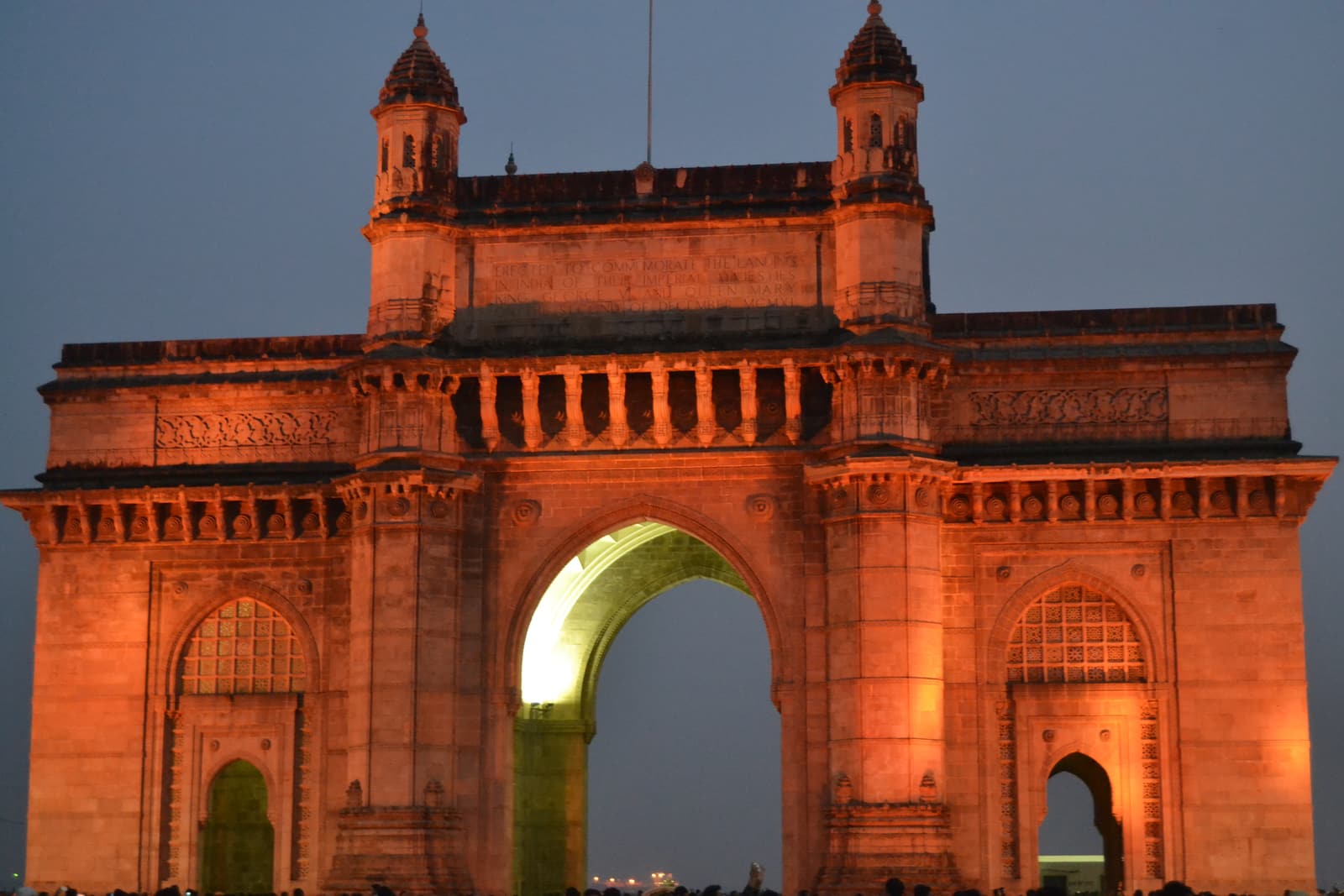
The basalt arch on the harbour is Mumbai’s front door: built to mark a royal landing in 1911, finished in 1924 and now the city’s favourite meeting place. Next to it stand the Taj Mahal Palace hotel, the Elephanta ferries and the stalls and cafés of Colaba Causeway.
 South Mumbai icons
Elephanta Caves
A rock-cut Shiva temple on an island
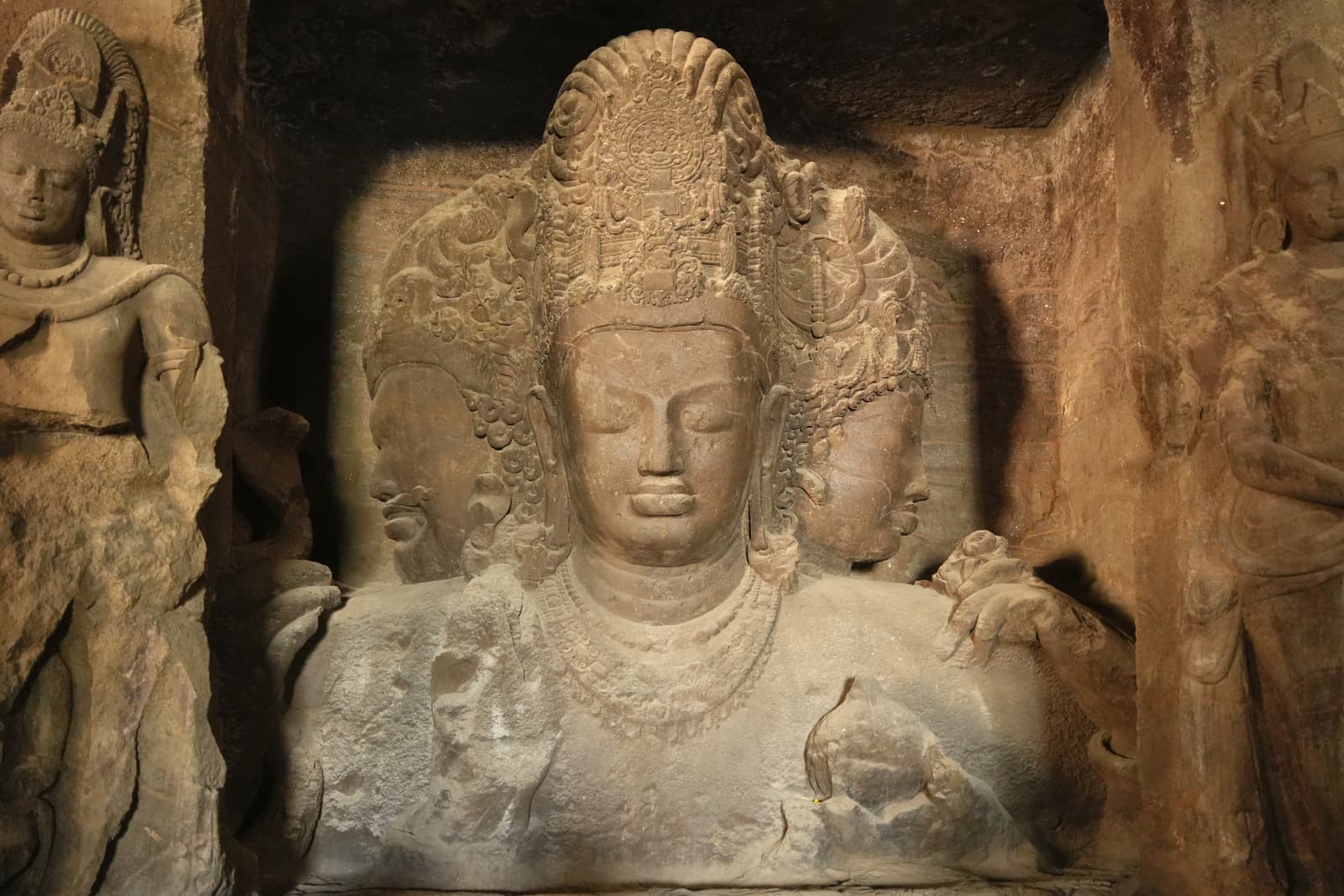
An hour by ferry from the Gateway of India, a hillside on Elephanta Island hides one of the masterpieces of Indian sculpture: a cave temple cut from solid basalt around the 5th–6th centuries, with a six-metre, three-faced Shiva at its heart. A UNESCO World Heritage Site, closed on Mondays.
 South Mumbai icons
CSMT (Victoria Terminus)
The grandest railway station in Asia
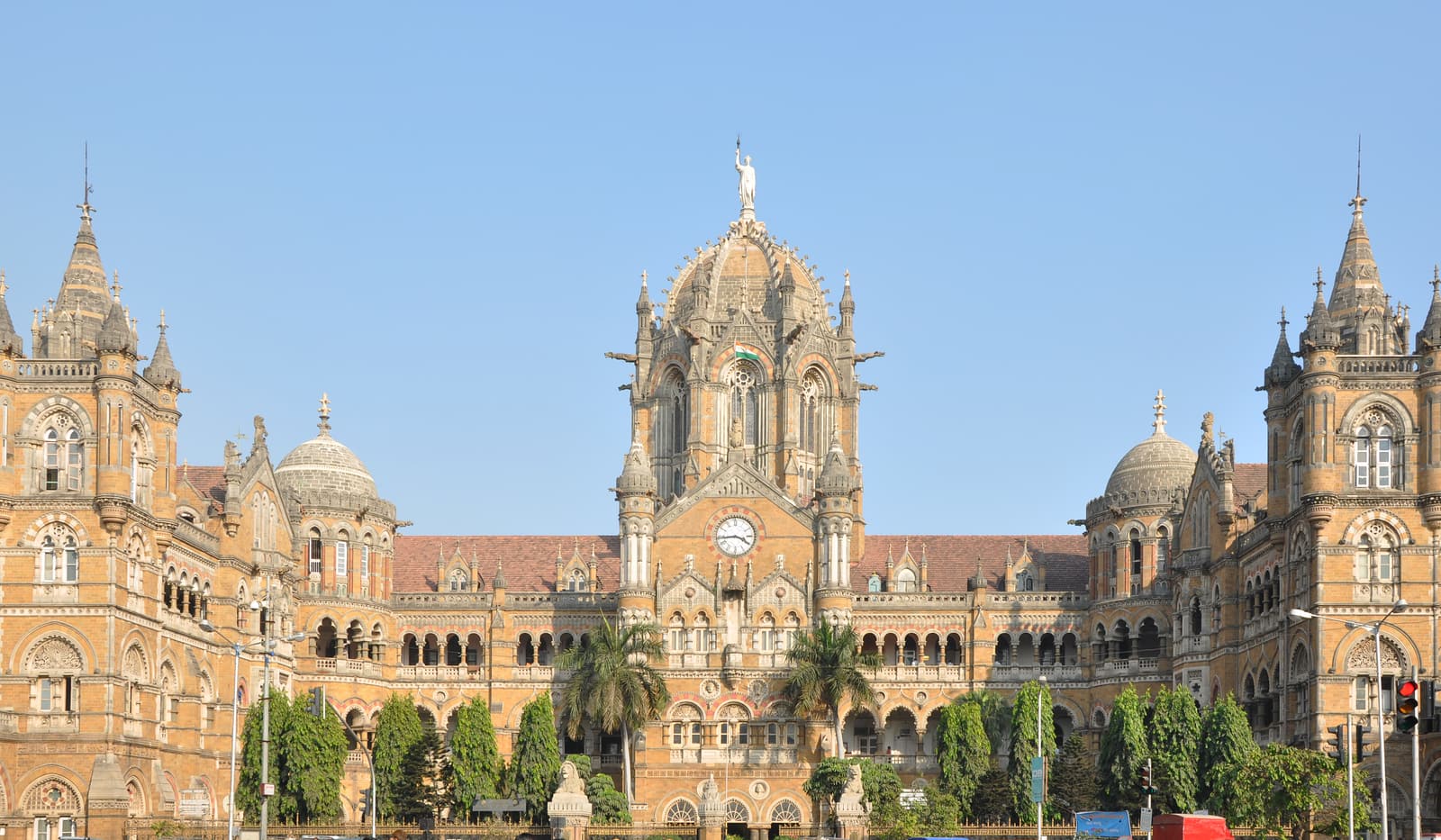
Chhatrapati Shivaji Maharaj Terminus is a working station dressed as a cathedral: turrets, gargoyles, stained glass and a great dome, designed by F. W. Stevens and completed in the late 1880s. It is a UNESCO World Heritage Site and still handles millions of commuters.
 South Mumbai icons
Fort, Oval Maidan & Kala Ghoda
Victorian Gothic meets Art Deco
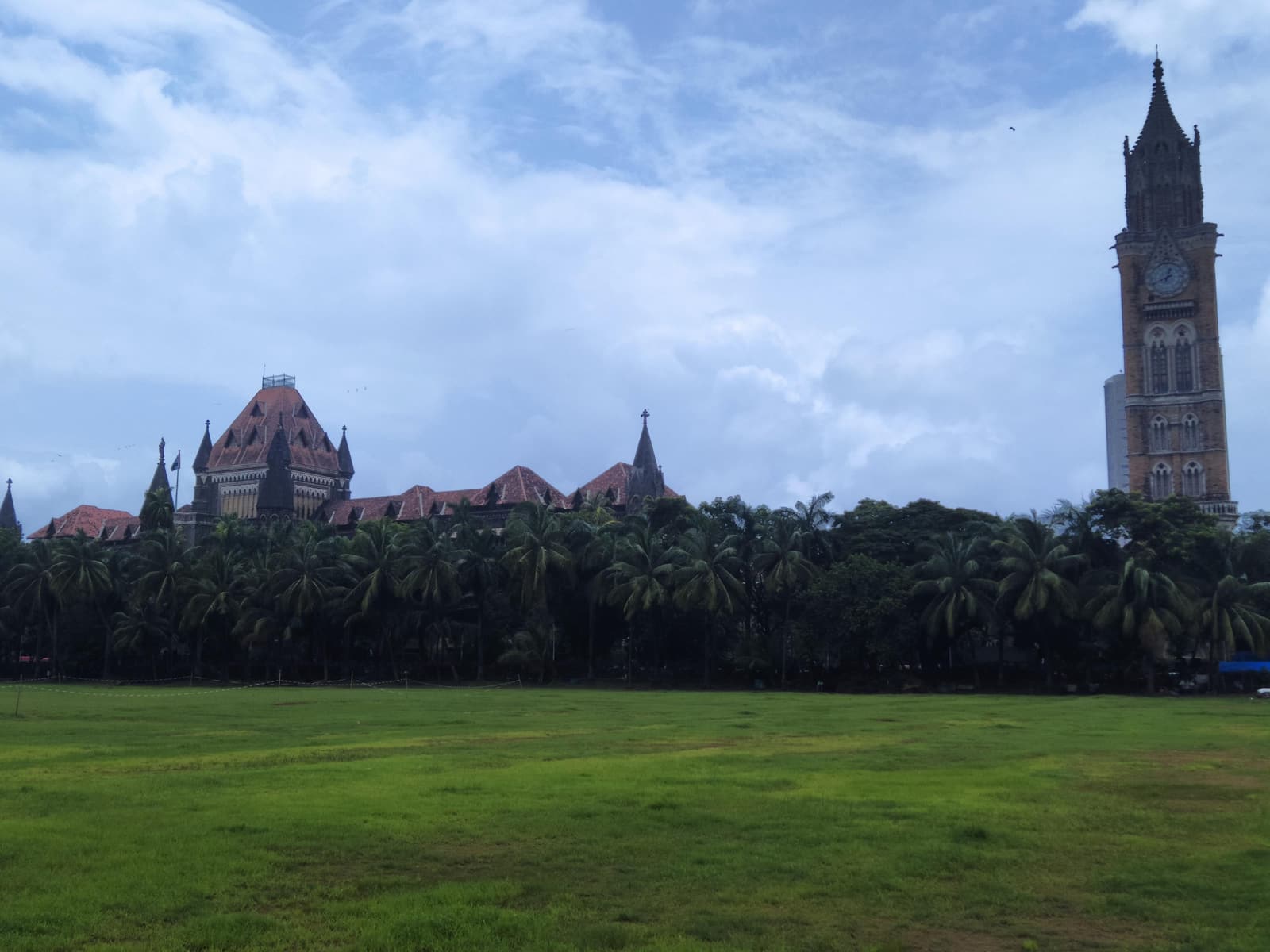
Across the cricket pitches of the Oval Maidan, a row of Victorian Gothic public buildings faces a row of 1930s Art Deco apartment blocks — together a UNESCO World Heritage ensemble. Around them lie the Fort business district and Kala Ghoda, the city’s gallery and museum quarter.
Three days in Mumbai: a sample itinerary
- Day 1 — the old city. Gateway of India and Colaba Causeway in the cool of the morning; the CSMVS museum and Kala Ghoda through the midday heat; the Oval Maidan, Flora Fountain and CSMT in the late afternoon; sunset on Marine Drive and chaat at Chowpatty.
- Day 2 — the island and the bazaars. The first ferry to Elephanta (not on Mondays); a late lunch in Fort; Crawford Market and the bazaars; a street-food tour in the evening.
- Day 3 — the middle and the north. Mani Bhavan and Banganga; Haji Ali and Dhobi Ghat, or a morning Dharavi tour; then Bandra for the fort, the street art, sunset on Bandstand and dinner.
What to eat
Mumbai’s street food is the best argument for visiting. The essentials:
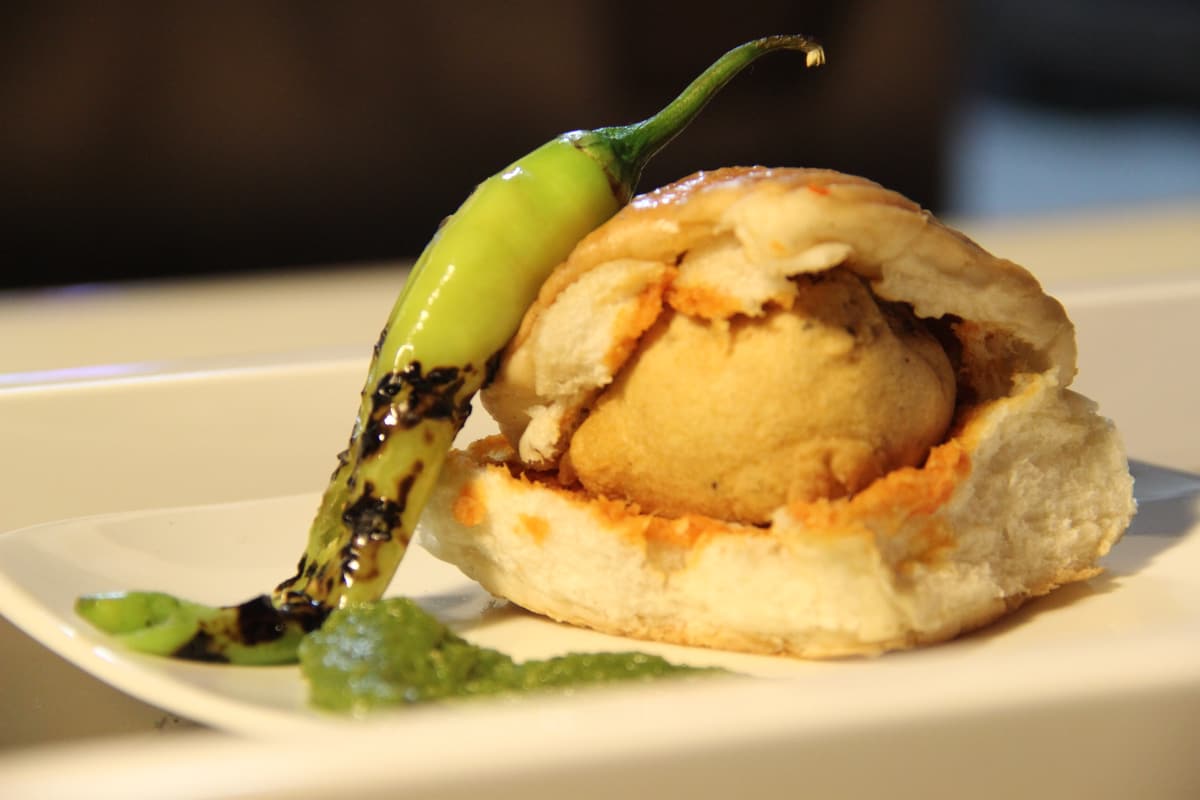
- Vada pav — a spiced potato fritter in a soft bun with dry garlic chutney and a fried green chilli. The city’s own burger, sold on every corner.
- Pav bhaji — a buttery mash of vegetables and spices cooked on a huge griddle and eaten with toasted buns.
- Bhel puri, sev puri and pani puri — the chaat family: puffed rice, crisp shells, potato, onion, tamarind and coriander chutneys. Chowpatty and Juhu beaches are the traditional places.
- Misal pav and kheema pav — spicy sprouted-bean curry, or minced mutton, with bread: Maharashtrian and Irani-café breakfasts.
- Bombay sandwich — toasted white bread, green chutney, potato, beetroot, cucumber and cheese.
- Seafood — try bombil (Bombay duck) fried crisp, surmai (kingfish) fry and a Malvani or Gomantak fish thali.
- Parsi and Irani cafés — bun maska with sweet milky chai, berry pulao and dhansak in century-old dining rooms in Fort and Ballard Estate.
- Kebabs and Ramadan food on Mohammed Ali Road and behind the Taj in Colaba.
- To finish: kulfi, falooda, fresh sugarcane juice and “cutting chai” — a half glass of strong, sweet tea.
Only in Mumbai
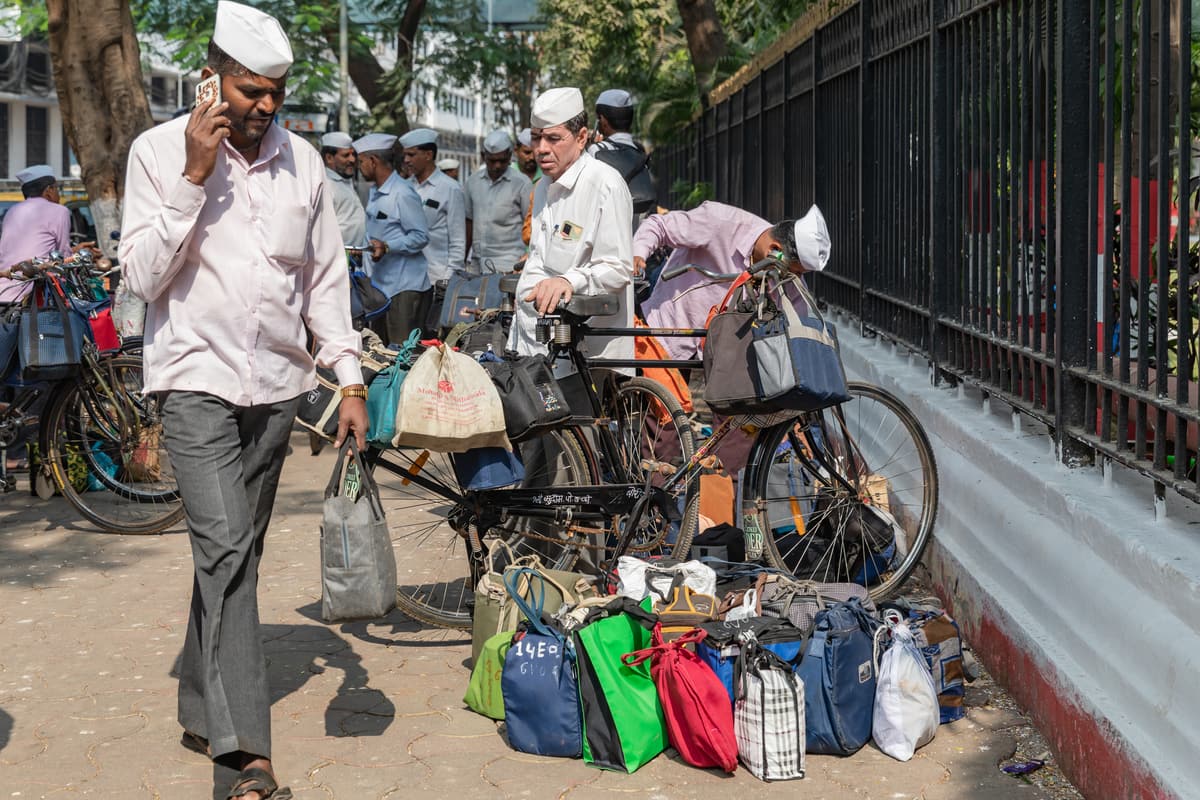
The dabbawalas. Every working day around five thousand men in white caps collect something like 200,000 home-cooked lunches from the suburbs and deliver them to offices by train, bicycle and handcart, using a colour code painted on each tin — then take the empties home again. The system is over 130 years old and famously reliable. The best place to watch is outside Churchgate station between about 11:30 and 12:30, Monday to Saturday.
Bollywood. The Hindi film industry is based in the northern suburbs. You cannot simply walk on to a set, but Bollywood tours take you into Film City in Goregaon, and catching a new release at one of the old single-screen cinemas — the Art Deco Regal, say — is an experience in itself.
Cricket on the maidans. Dozens of matches overlap on the Oval, Cross and Azad Maidans every weekend. Wankhede Stadium, just behind Marine Drive, hosts international and IPL games.
Festivals
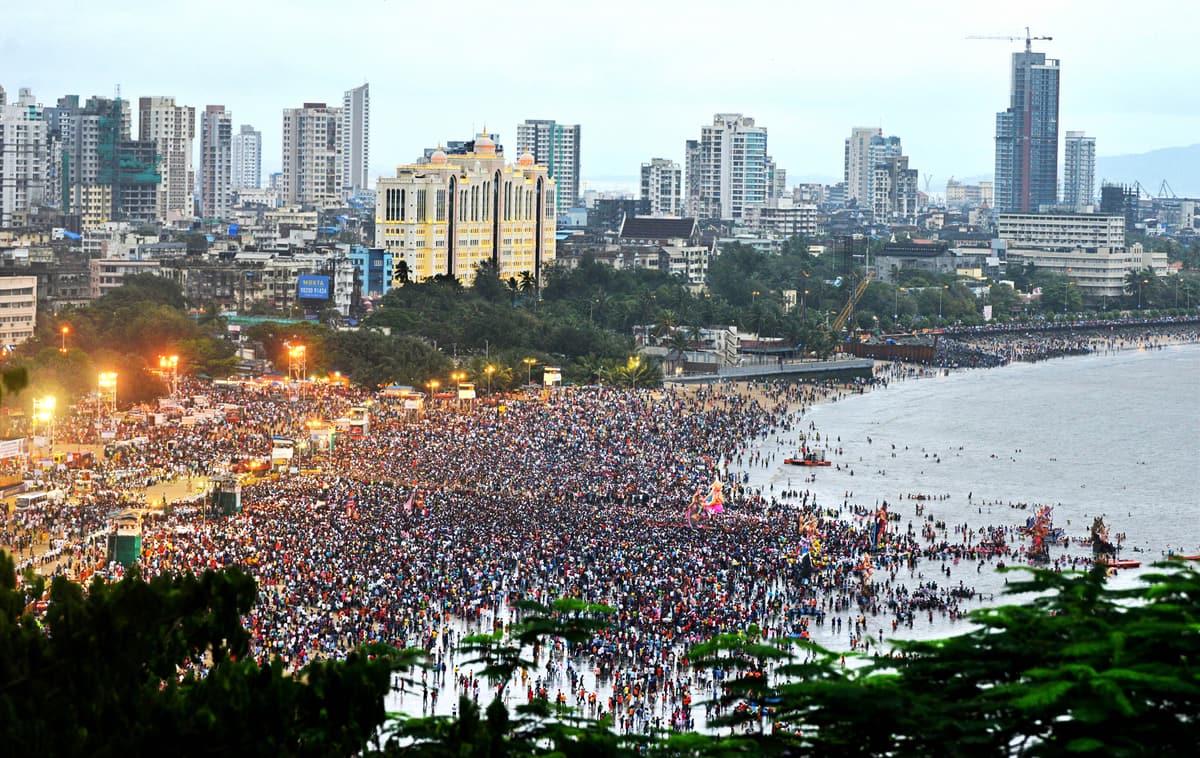
Ganesh Chaturthi (August or September) is Mumbai’s great festival: for ten days neighbourhoods install towering idols of Ganesh in decorated pavilions, and on the last day processions carry them to the sea at Girgaon Chowpatty and Juhu for immersion. It is unforgettable and extremely crowded. Ramadan brings the night food markets of Mohammed Ali Road; Navratri brings nine nights of garba dancing; Diwali lights up Marine Drive; the Mount Mary Fair fills Bandra in September; and the Kala Ghoda Arts Festival usually runs in late January or February. See when to visit for dates.
Day trips from Mumbai
- Lonavala, Khandala, Karla and Bhaja — hill stations and ancient Buddhist caves, two to three hours away.
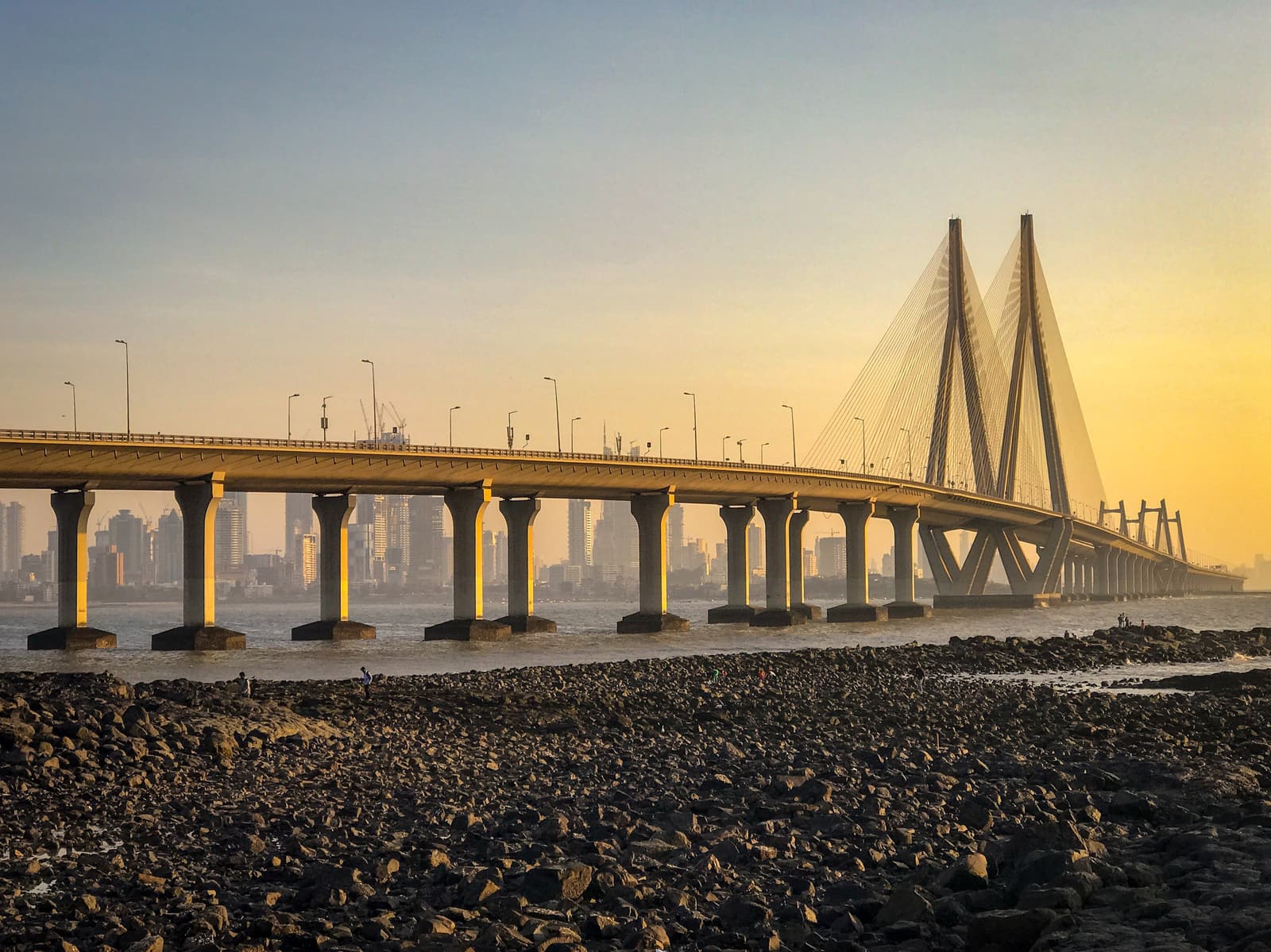
- Alibaug — beaches, coconut groves and the sea fort of Kolaba, which you can walk to at low tide. Take the ferry from the Gateway to Mandwa (about an hour, mostly outside the monsoon) and a connecting bus, or drive around via the Atal Setu.
- Matheran — a small hill station at about 800 m where motor vehicles are banned: red-earth paths, horses, hand-pulled rickshaws and a narrow-gauge toy train from Neral, parts of which are suspended in the monsoon.
- Pune — the old Maratha capital, about three hours away by expressway or train, for Shaniwar Wada and the Aga Khan Palace.
- Mahabaleshwar — Maharashtra’s best-known hill station, about 250–280 km away and five to six hours by road, so it needs at least one night. Our Mahabaleshwar travel guide covers the viewpoints, Venna Lake, strawberry season and the routes from Mumbai.
- Ajanta and Ellora — not a day trip in practice, but the best two- or three-day extension, via Aurangabad (Chhatrapati Sambhajinagar).
Money, phones and practicalities
- Money: ATMs are everywhere. Keep small notes for taxis and stalls.
- Tipping: around 10% in restaurants if service is not included; round up taxi fares; tip guides and drivers at your discretion.
- SIM and data: airport counters sell tourist SIMs against your passport; an eSIM is simpler. Coverage is excellent.
- Electricity: 230 V; sockets take round-pin plugs (types C, D and M).
- Visa: most nationalities need a visa or e-visa arranged in advance — apply only through the Indian government’s official site.
- Water: drink bottled or filtered water.
Safety and etiquette
- Traffic is the main hazard. Cross with the crowd and use subways and footbridges.
- Trains: avoid rush hour and keep bags in front of you. See getting around.
- Women travellers: Mumbai is widely regarded as one of India’s more comfortable big cities for women. Use the ladies’ compartments on trains and app taxis late at night.
- Touts: ignore unsolicited “guides” at the Gateway and Crawford Market, and anyone inviting you to be a film extra unless it comes through a reputable channel.
- Religious places: cover shoulders and knees, remove shoes, and ask before photographing people.
- The sea: the city beaches are for walking and eating, not swimming. In the monsoon keep away from the sea wall at high tide.
- Alcohol: widely available in bars and restaurants; there are a few dry days each year, and the legal drinking age in Maharashtra is higher than in many countries — carry ID.
What to pack
- Light cotton or linen clothes, and a scarf or shawl for shrines and over-air-conditioned restaurants.
- Comfortable closed shoes for uneven pavements; sandals that slip off easily for temples.
- Sunscreen, sunglasses and a hat from October to May.
- In the monsoon: a sturdy umbrella, quick-drying clothes, waterproof sandals and a dry bag for your phone.
- Hand sanitiser, tissues and any regular medication.
- A power bank — you will use maps and ride apps all day.